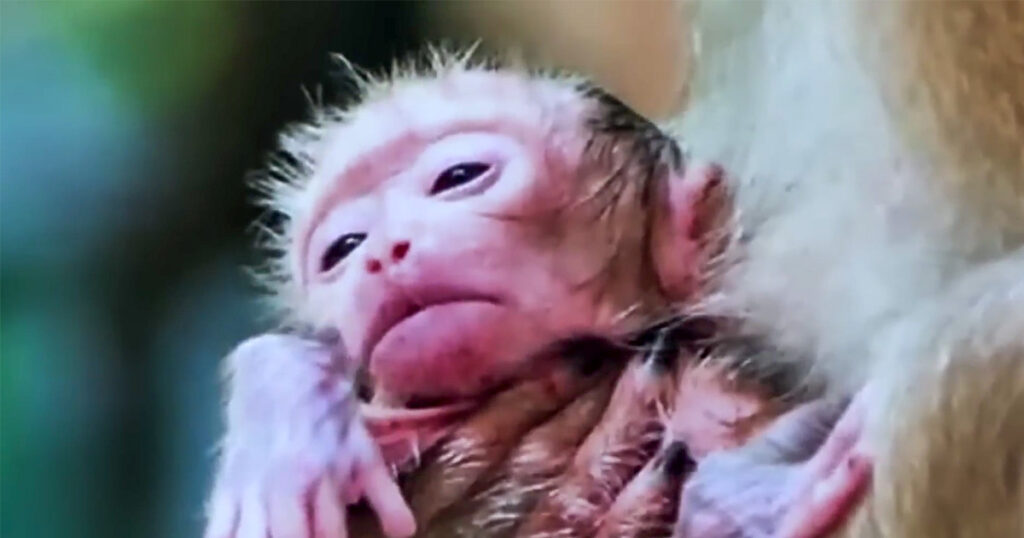

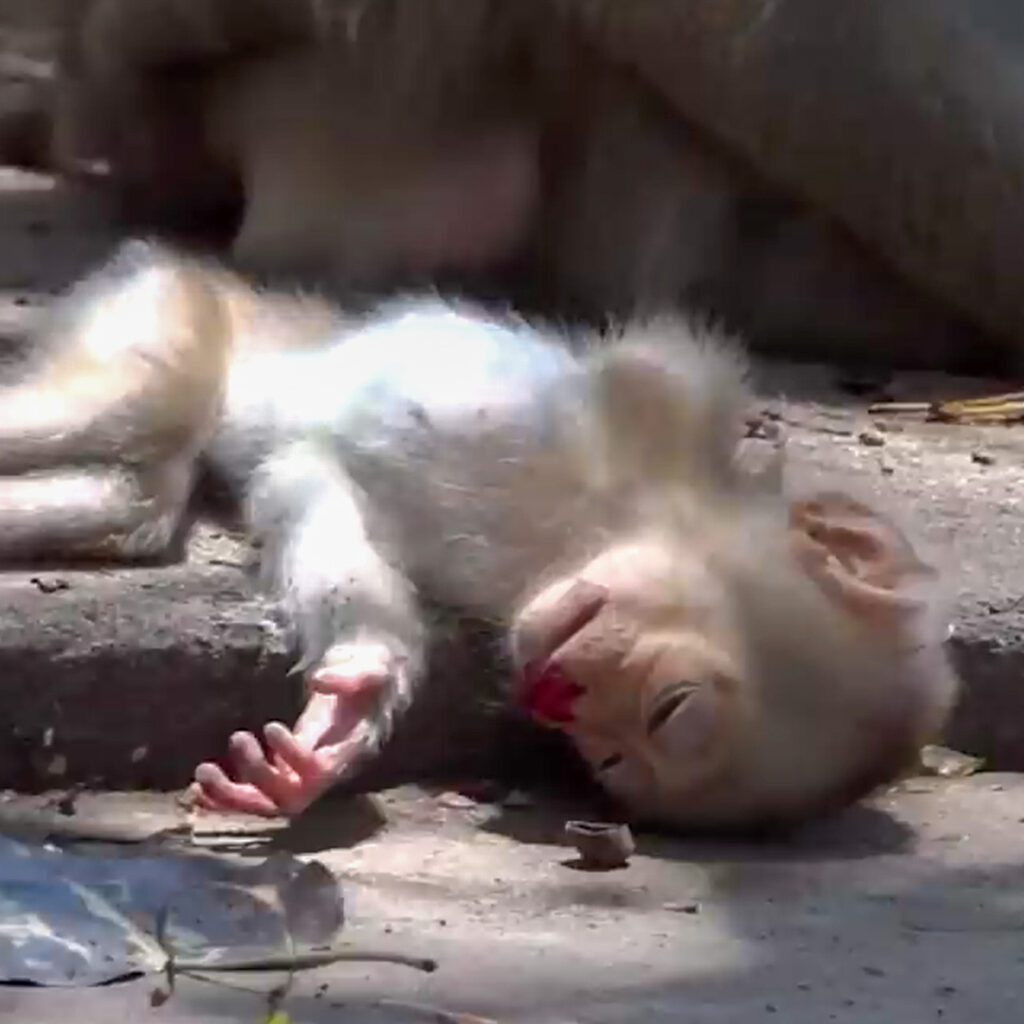
It starts small. A baby macaque, still small enough to fit in the curve of its mother's arm, takes a few steps away from her on the stone terraces of Angkor Thom. It pauses. Looks back. She doesn't move to grab it. And for a moment, the baby is on its own.
To anyone watching, it looks like the saddest thing in the world. A baby monkey, walking away, and a mother who doesn't chase after it. Comment sections fill up with the same question: why would she let it go?
But if you spend enough time with a wild troop — the way we do here at Angkor Thom, morning after morning — you start to understand that this isn't abandonment. It's growth. And it's one of the toughest, most necessary parts of a young monkey's life.
Long-tailed macaques are born almost entirely dependent. For the first few weeks, a baby rarely leaves its mother's body at all, riding pressed against her stomach as she climbs, forages, and rests. Slowly, that grip loosens. The baby starts riding on her back instead of her belly. Then it starts climbing off during rest periods, just a foot or two away, always watching her face for reassurance.
By a few months old, that distance grows. The baby starts play-wrestling with other juveniles, follows older siblings on short foraging trips, and — this is the part that breaks viewers' hearts — sometimes gets left behind on purpose. Mothers in a macaque troop don't hover. If a baby is old enough to keep up, she'll often move on without waiting, forcing it to catch up on its own legs. It's not neglect. It's how she teaches it to survive without her.
We watched a version of this play out ourselves recently. A young macaque lagged behind as its troop moved through the ruins, letting out short distress calls — a thin, urgent sound very different from an adult's bark. The mother, only a short distance ahead, glanced back but kept walking at an easy pace. Within a minute, the baby broke into a scrambling run, tail up, and closed the gap. No one comforted it. No one needed to. It simply learned that keeping up was its job now.
This is the moment that video titles call "heartbreaking," and honestly, it is hard to watch. But it's also exactly how a wild troop works. Macaque society runs on independence built early — juveniles who can forage, flee danger, and navigate the troop's social order on their own are the ones who survive to adulthood. A mother who let her baby cling forever wouldn't be doing it any favors.
What makes Angkor Thom such a remarkable place to watch this is the scale of it. These macaques have shared the ruins with monks, tourists, and each other for generations, and their social structures are stable enough that you can watch a single milestone — a baby's first steps alone — and understand exactly what it means for that individual's future in the troop.
So the next time you see a baby monkey walking away from its mother and your heart sinks a little, remember: that walk is the whole point. It's not the end of anything. It's the beginning of a monkey learning how to be a monkey.